The Serengeti National Park is one of Africa’s most iconic safari destinations, famous for its vast plains, abundant wildlife, and the spectacular Great Wildebeest Migration. Choosing the best time to visit Serengeti for safari depends on what you want to see: dramatic river crossings, calving season, or classic big game viewing. This guide breaks down the best months to experience the Serengeti at its best.
Understanding Serengeti Seasons
Serengeti safaris are influenced by two main seasons: the dry season and the green (rainy) season. Each offers unique wildlife experiences and travel advantages.
January – March: Calving Season in Southern Serengeti
Best for: Baby animals, predator action, photography
These months mark the Great Migration calving season in the southern Serengeti and Ndutu area. Thousands of wildebeest give birth, attracting lions, cheetahs, and hyenas. Wildlife viewing is intense, landscapes are green, and temperatures are warm, making it one of the most rewarding times for a safari.
April – May: Green Season & Fewer Crowds
Best for: Quiet safaris, birdwatching, lower prices
This period brings long rains, transforming the Serengeti into a lush paradise. While some areas may be harder to access, wildlife remains present, and crowds are minimal. It’s an excellent time for photographers and travelers seeking a peaceful safari experience.
June: Start of the Dry Season
Best for: Comfortable weather, classic game drives
June signals the beginning of the dry season. Wildlife begins gathering around water sources, and the migration starts moving north through the western corridor. Safari conditions improve, and visibility is excellent.
July – August: River Crossings & Peak Safari Season
Best for: Great Migration river crossings, dramatic action
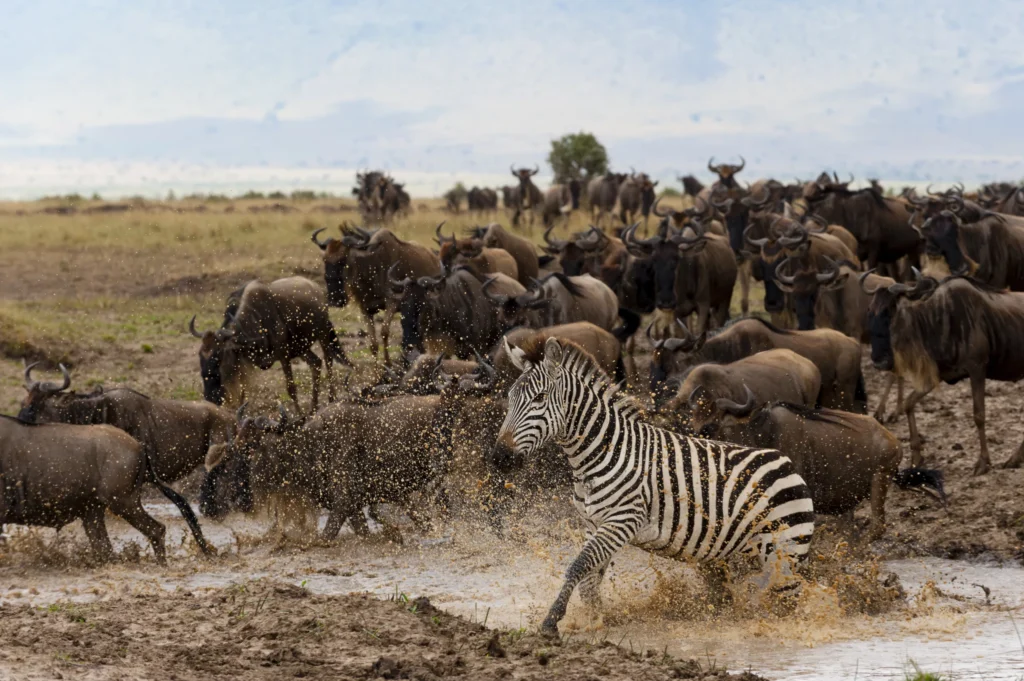
This is the most famous time to visit the Serengeti. The migration reaches the Grumeti and Mara Rivers, where wildebeest face crocodile-filled waters. The weather is dry and cool, wildlife viewing is exceptional, and demand is high; booking is essential.
September – October: Excellent Big Game Viewing
Best for: Predator sightings, fewer crowds than peak season
These months offer some of the best overall safari conditions. Vegetation is sparse, animals concentrate near water, and the migration continues in the northern Serengeti. It’s ideal for travelers who want top wildlife viewing without peak-season congestion.
November: Short Rains & Fresh Landscapes
Best for: Shoulder-season travel, photographers
Short rains return in November but are usually brief. The Serengeti becomes greener, wildlife remains active, and visitor numbers drop. It’s a great balance between good game viewing and more affordable travel.
December: Festive Safaris & Migration Return
Best for: Holiday travel, summer safaris
December is warm and lively, with the migration starting to move back toward the southern Serengeti. Wildlife viewing remains strong, and the festive atmosphere makes it a popular month for safari holidays.
So, When Is the Best Time to Visit Serengeti?
Best overall safari: June to October
Best for calving season: January to March
Best for river crossings: July to August
Best budget-friendly travel: April, May, and November
The Serengeti is a year-round safari destination, and every season offers a different side of its beauty. Whether you’re chasing the Great Migration or enjoying classic game drives, there’s no wrong time to explore this legendary park.