
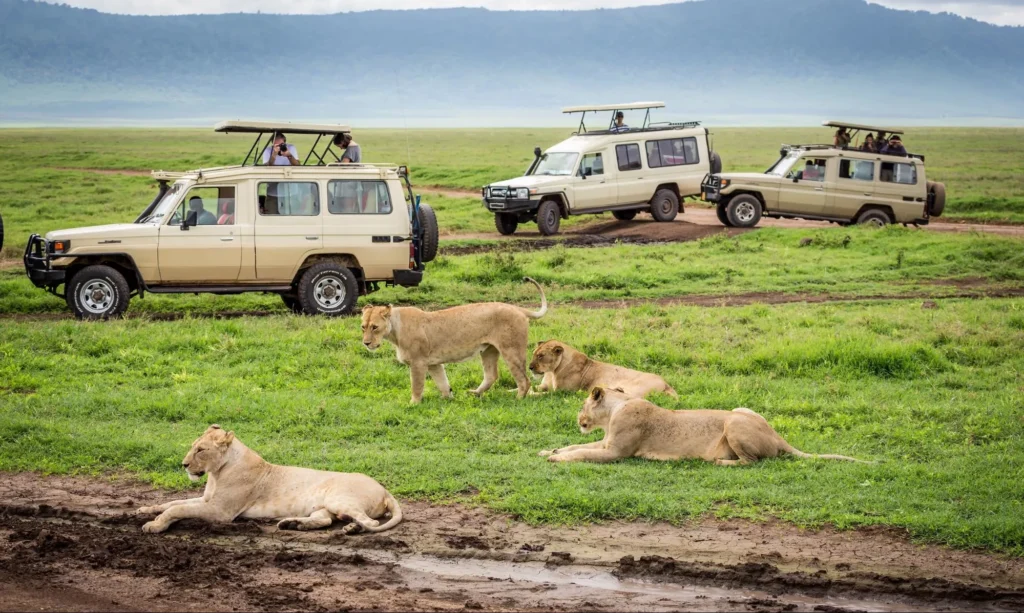
Seeing a lion just a few meters away while sitting in an open safari jeep is thrilling and for many travelers, a little scary. A common question arises: why don’t lions attack tourists on safari jeeps in Tanzania?
The answer lies in animal behavior, biology, and years of coexistence between wildlife and safari tourism.
Lions Do Not See Safari Vehicles as Prey
Lions are highly visual hunters. They instinctively identify prey based on shape, movement, and behavior. A safari jeep does not resemble any natural prey animal found in the wild.
To a lion, a vehicle appears as:
One large, unfamiliar object
Too big to hunt
Not behaving like prey
Because tourists remain seated and still, lions perceive the vehicle and its occupants as a single unit, not individual humans.
Humans Inside Vehicles Don’t Trigger Hunting Instincts
Lions hunt animals that:
Move erratically
Run away
Show signs of fear
Tourists in safari jeeps are elevated, quiet, and stationary. This lack of prey-like movement means a lion’s hunting instincts are not activated.
Once humans stand up, lean out excessively, or exit the vehicle, the situation changes this is why guides strictly enforce safari rules.
Lions in Tanzania Are Habituated, Not Tame
In popular parks like the Serengeti and Ngorongoro, lions have grown habituated to safari vehicles over decades. Habituation means:
Lions are accustomed to vehicles being present
They recognize vehicles as neutral, non-threatening objects
They do not associate vehicles with food
This is very different from domestication. Lions remain wild and dangerous animals at all times.
Safari Rules Minimize Risk
Professional safari operations in Tanzania follow strict guidelines that keep both tourists and wildlife safe:
No exiting vehicles inside national parks
No feeding or provoking animals
Engines are often turned off near wildlife
Safe distance maintained at all times
These rules prevent lions from seeing humans as potential prey or threats.
Lions Are Energy-Conserving Predators
Hunting requires enormous energy and carries a high risk of injury. Lions avoid unnecessary confrontations, especially with unknown objects like vehicles.
Attacking a safari jeep would:
Waste energy
Risk injury
Offer no food reward
From a lion’s perspective, it is simply not worth the risk.
Why Lion Attacks on Safari Are Extremely Rare
While lions are capable of attacking humans, incidents involving tourists in vehicles are exceptionally rare in Tanzania. Most lion attacks occur when:
People walk alone at night in unfenced areas
Livestock encroaches on lion territory
Individuals approach lions on foot
Safari tourism, when properly managed, maintains a safe boundary between humans and wildlife.
What Would Happen If Tourists Left the Vehicle?
If a person exits the safari jeep or behaves unpredictably:
The lion may suddenly recognize a human shape
Curiosity or defensive behavior could be triggered
The risk level increases dramatically
This is why guides emphasize staying inside the vehicle at all times.
Conservation and Respect Are Key
Tanzania’s long history of conservation and regulated tourism has created an environment where wildlife and humans coexist safely. Respecting animals, following rules, and supporting responsible safari operators ensures this balance continues.
Safety Through Understanding Nature
Lions don’t attack tourists on safari jeeps in Tanzania because they do not perceive vehicles as prey, are habituated to their presence, and avoid unnecessary risks. Safari safety is the result of animal behavior science, strict rules, and experienced guides not luck.
A safari offers a rare chance to observe lions in their natural habitat, calmly and safely, when nature is respected.
Ready for a Tanzania safari? Sit back, follow the rules, and enjoy one of the world’s most extraordinary wildlife experiences.